
Meal'worm'mso
its another uncomfortable topic to talk about...

I have a little background story to share.
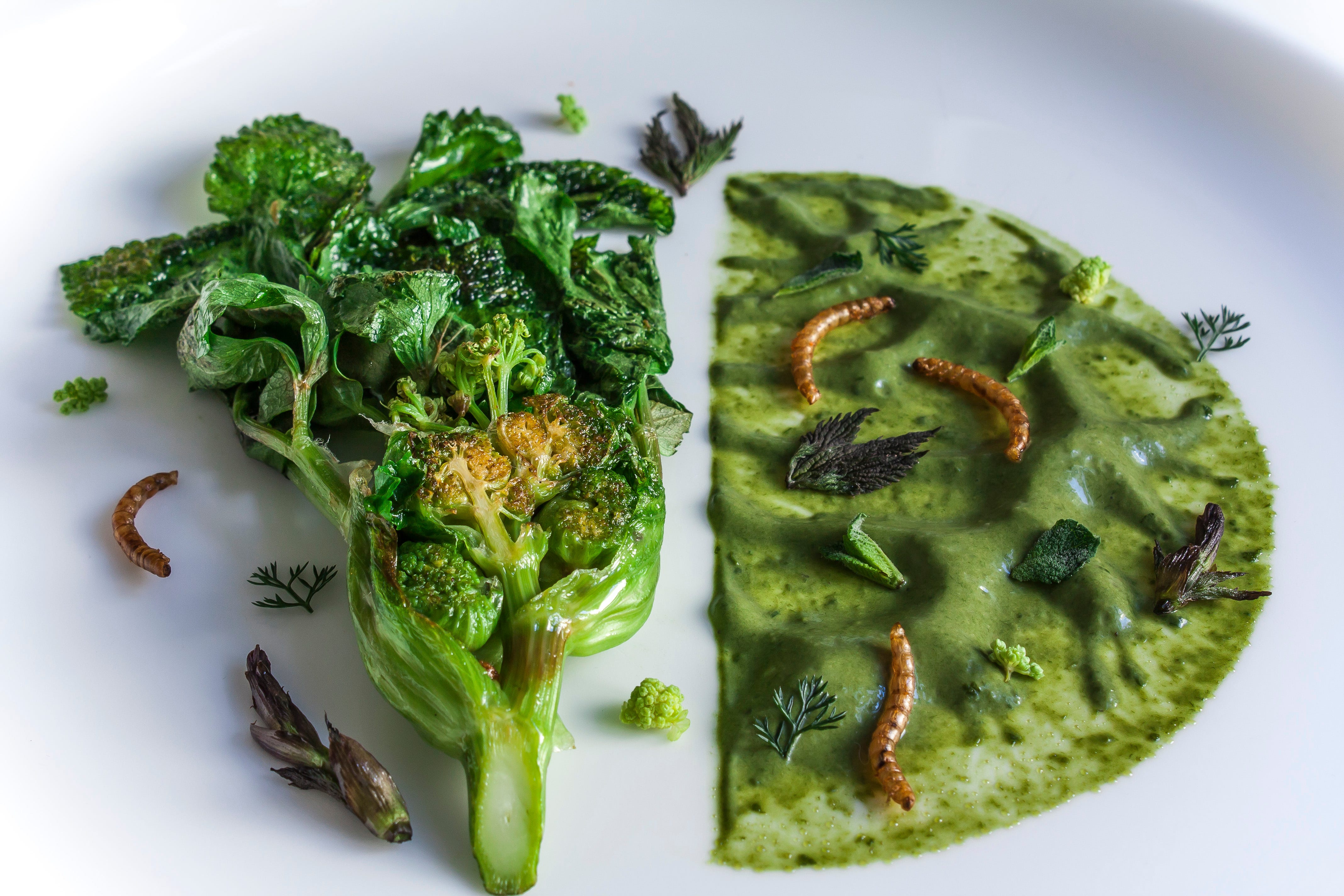
My Dad was always a bird collector. Since i know that this is a thing. I grew up with thousands of small chirpy noisy singing birds in all colours of the rainbow. It’s a great hobby i think and also very time and energy-consuming. But im jumping to the point.
My Dad was taking this hobby super seriously so the birds got a proper menu to eat every day literally. And part of the menu was mealworms. Alive. Yes.
So i had an amazing childhood growing up with boxes and boxes full of mealworms - this thing is not strange or weird for me at all. I touch them - they keep dancing around between your fingers its a pretty weirdly satisfying sensation. I was feeding them with apples and cabbages and potatoes and other vegetable scraps. They liked to live in the dark and cool basement. I liked them when i was a kid. A lot.


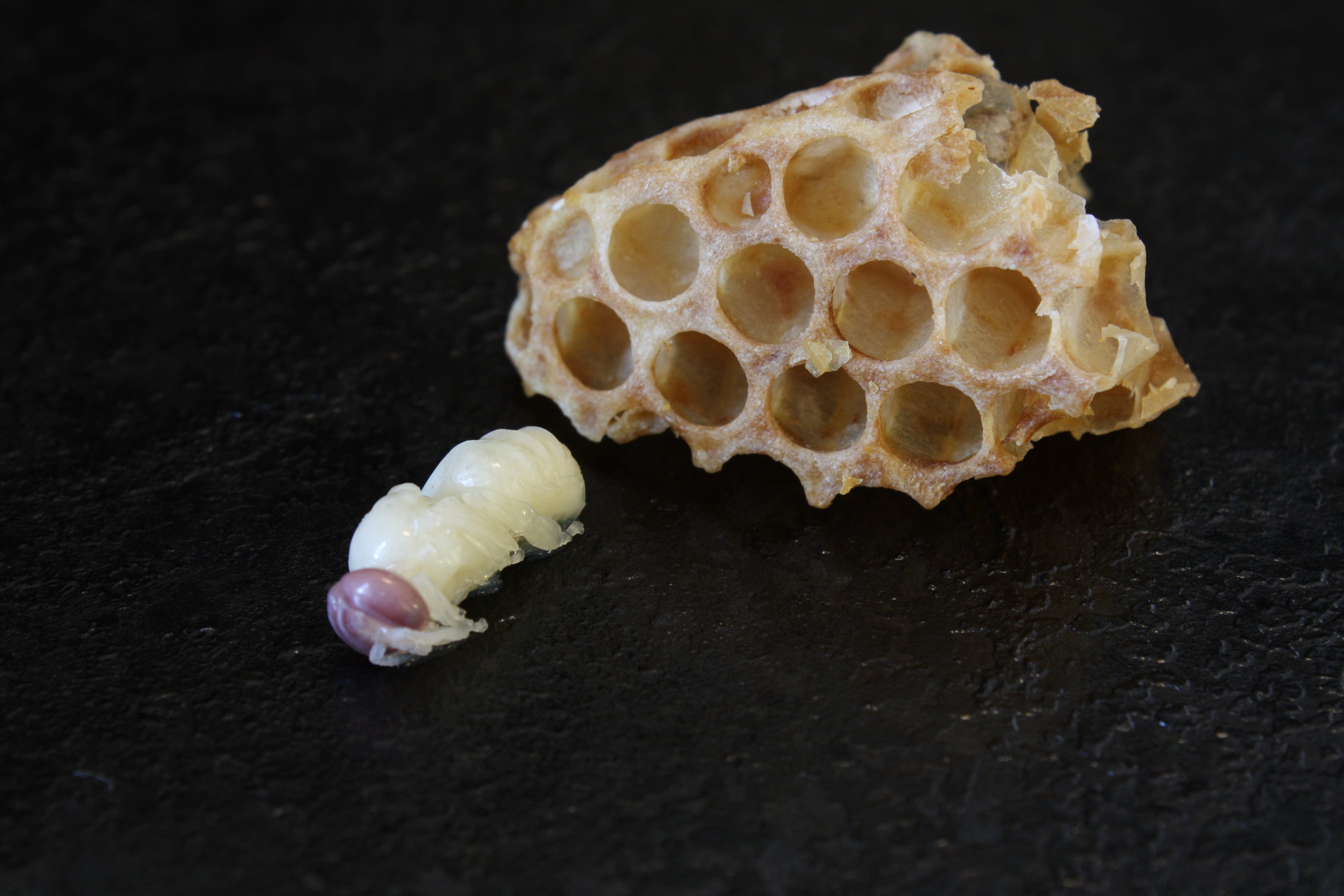
Then I grew up and i went to do an internship at NOMA in Copenhagen, Denmark. I met a brilliant gardener LIV, and i spent quite some time with her in the greenhouse and the roof garden. Im not sure how it happened but suddenly i got into eating insects. I mean it wasn’t entirely a surprise LOL as one day we were sampling black ants and we had to clean them from the tiny feet and we tried them and they tasted lovely lemony. The next occasion we were cleaning out the bees’ larvae and i had to try some and they just tasted like honey without sweetness. Mindblowing.
So i guess i got all these experiences around and lots of chat with Liv about insects in the glasshouse (she was writing her dissertation about this i believe) and suddenly i found a farm in Denmark where they were selling mealworms for human consumption. Got mental. Also back in that time, i think there was a little revolution on edible insects as few supermarkets were trying to put them on their shelves (with not very much of a success i think). Anyway, i managed to order some mealworm flour and snacks from this farm called: Heimdal Entofarm. And it was mindblowing. The snacks were just ‘snacks’ with different seasonings like chilli and lime or salt and vinegar but i did enjoy them as a sprinkle on my breakfast eggs. BUT THE FLOUR! The mealworm meal was actually life-changing. It tasted soooo umami full and rich. Heavy and a bit like pork crackling. I made some insane cookies with it and bread and burgers. So so so good. It was not cheap but worth every penny.


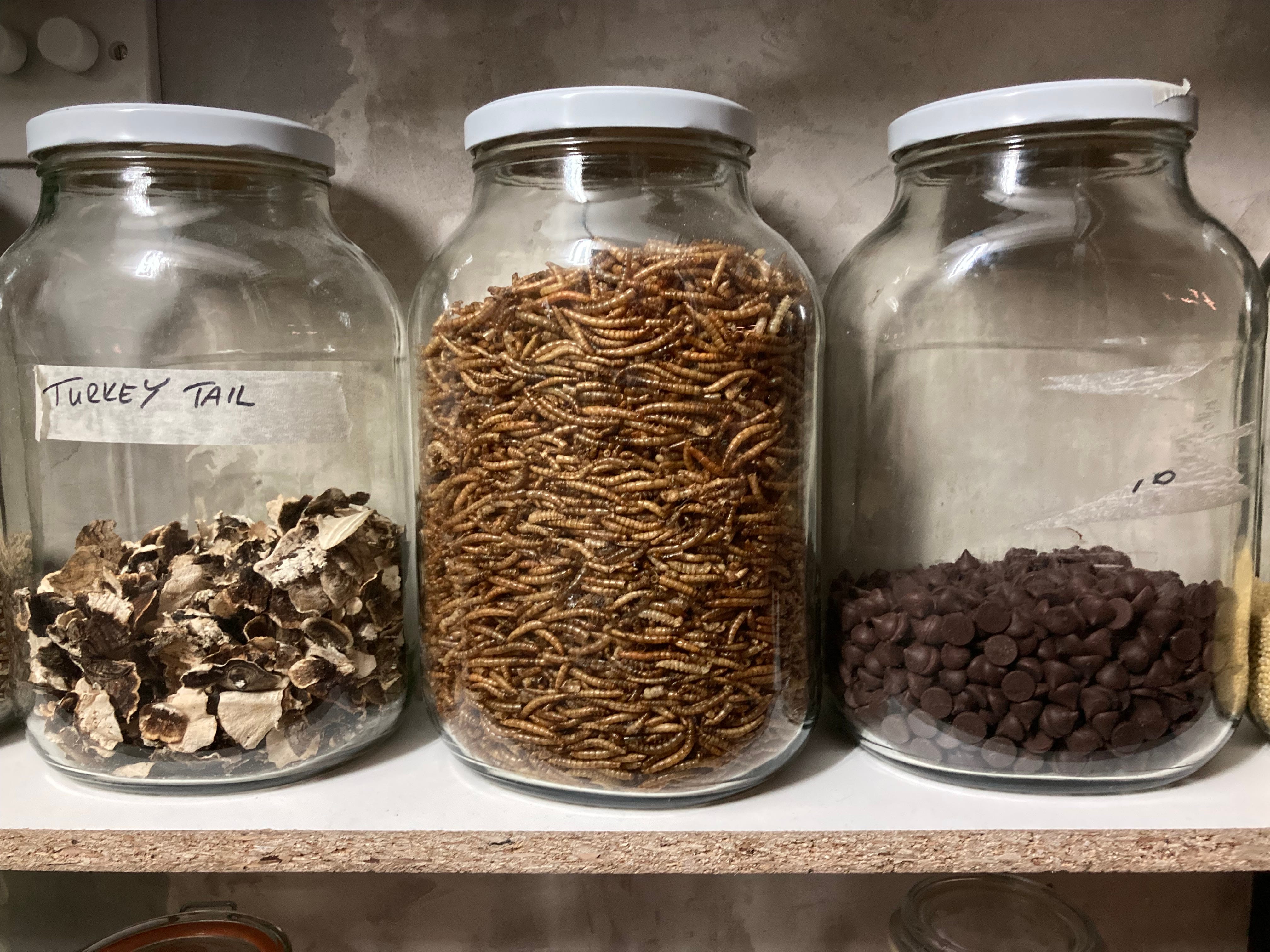
Now back to the present ish’. Probably because of this background, i have decided to carry on working with insects. Mostly with TENEBRIO MOLITOR - mealworm beetle larvae. As i stopped seeing them as insects years and years ago they literally sitting in my kitchen shelves in between chocolate chip and turkey tail mushrooms. So i decided i would make a mealworm miso.
We all know that Noma has got a nice orange book with a recipe of a grasshopper garum. So there was a direction pointed out somewhere in nowhere a long time ago.
With all my personal experience with the greatest mealworm meal i had in Denmark (already packed with umami), it was very obvious to make a long-term miso.
The only problem came along - the source of mealworms. I was not in Denmark anymore and also that farm is just not cheap enough. Having an expensive ingredient for further fermentation is just against my vision anyway. So i went for my Dad. :) And i took his mealworms first.
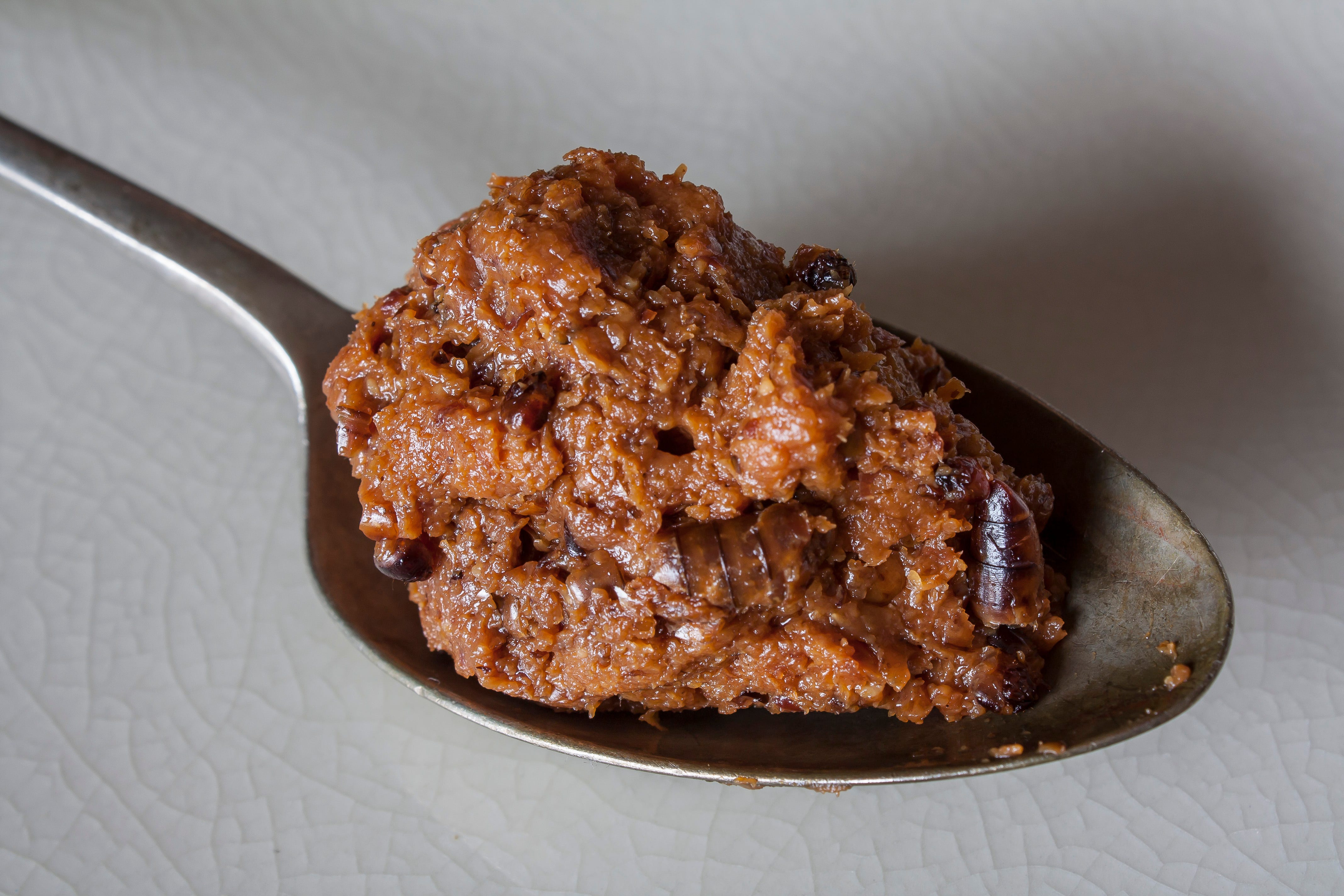
For the very first insect miso, i made i used Darkling beetle larvae. They are double sized of a normal Tenebrio Molitor and i was only thinking the double amount of juicy fattiness i can win out. So i collected handfuls of the insects from my Dad’s basement and froze them before i fried them (apologies to everyone, i did say a prayer and was as gentle as possible). Using rice koji darkling beetle larvae with 8% salt. I think i needed some extra brine while i was mashing all together. At that point - only at that point i got to the realisation that maybe the exoskeleton would cause a problem - as i chose bigger worms the amount of chitin also increased. Well, i havent found any documentation about this previously so i just had to give a chance to Koji to work itself through those crispy skins.
I checked this miso after more than a year of ageing. The colour turned amber and there was a fair amount of tamari swimming on the surface. No problem with the high-fat content - no signs of oxidation. The flavour profile stayed quite ‘wild’ and you can definitely detect the insect ‘compounds’. I know what it is but im not sure that people on a blind test would be able to guess it. Other than this it’s full of complexity and umami all over the place. But what about the exoskeleton? Yes - it didn’t disappear - especially the head parts stayed quite firm. Would not say it’s disturbing though while tasting the miso - instead it adds a little crunchy texture. I used this paste to bake bread with it - and this specific flavour structure increased the deliciousness of the baked goods for sure.
BUT THEN… I made a second attempt. This time I actually stuck with my plan using normal small mealworms. And you might gonna appreciate my genius idea or stop reading here when I say out loud that I used BIRDFOOD. Yes, I went to the store and bought a big plastic bucket of dried crunchy delicious bird snacks for only £20. I had absolutely no problem with it. I tried the worms and they were just fine.
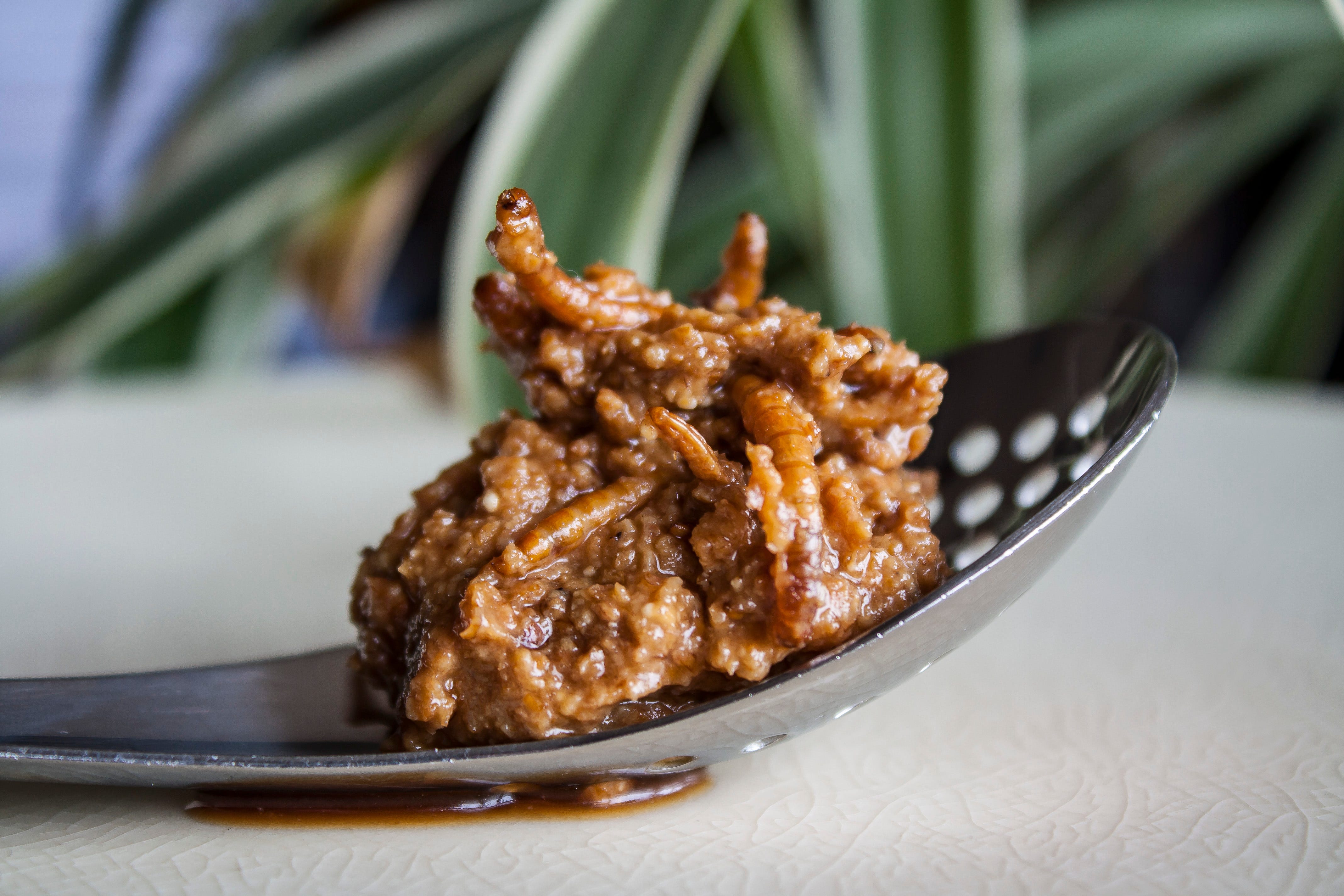
This time i used 10% salt and needed much more brine as i was using dried worms so it soaked up more the ‘juice of the koji rice;’. Thats it. It happened 11 months ago. I tasted it a few weeks ago. And IT TASTES WONDERFUL. It has no ‘wild’ side, no crunchy skulls lingering here and there. It’s complex, deep, and outstandingly similar to a soybean-based miso but with an extra fruitiness reaching out from the background. IT IS EVERYTHING THAT I DREAMED OF, THIS IS HOW IT IS MEANT TO BE.
Just stop for a second. I know that most of us suffer from serious NEOPHOBIA - but. Just using common sense and nothing else:
Several projections have suggested that the world population will reach over 9 billion by 2050. This increase in population requires approximately double the current food production. Alarmingly, global warming is gradually decreasing the areas used for food production worldwide. The climate change and environmental destruction from industrial development also negatively affect the food productivity. In light of the worsening resource shortage, several foods have been proposed as alternatives, with insects receiving the most attention. Insects are institutionally accepted as food in many regions and historically consumed, providing sufficient nutritional value for humans. However, the rapid increase in food production through technological advancement has largely eliminated insects from our diets.
SO WHY THE FUCK NOT?
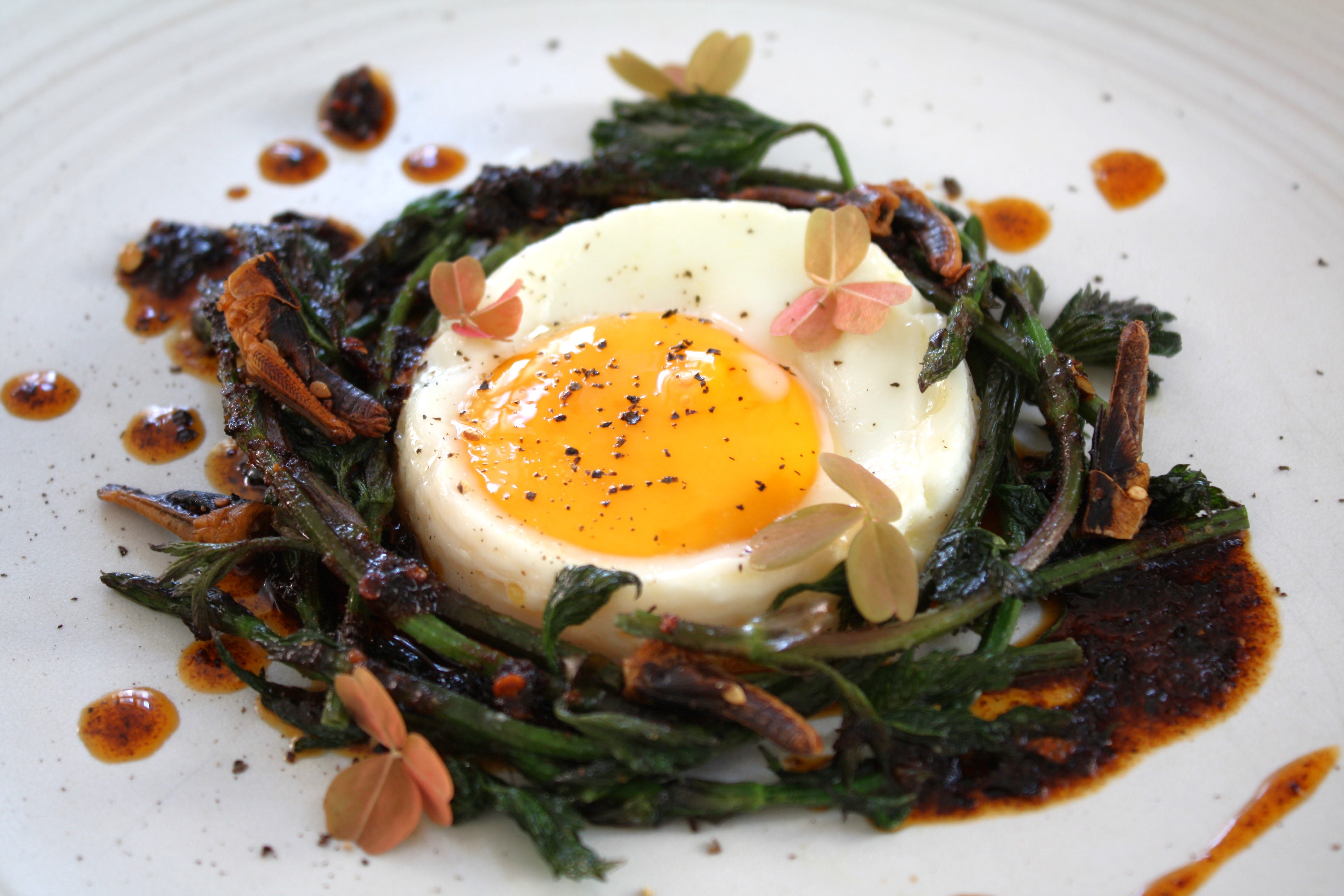
On average, the protein content of edible insects ranges 35%–60% dry weight or 10%–25% fresh weight, which is higher than plant protein sources, including cereal, soybeans, and lentils. At the upper range, insects provide more protein than even meat and chicken eggs.
And again…
Insects are incredibly easy to raise due to their fast reproduction rates and they are also incredibly high in protein. Believe it or not, insects such as mealworms, crickets, and black soldier fly larvae have been shown to provide significantly more protein than meat.


Perhaps the biggest benefit of producing edible insects for human and animal consumption is that they can be raised on food waste. Modern insect farms can produce low-cost protein by upcycling organic waste. It doesn’t stop here. When coupled with renewable energy, the production process also has a significantly lower carbon footprint. Research suggests processing waste through insect bioconversion generates up to 90% less greenhouse gases compared to landfill or composting. Additionally, insect farming saves about 100 times the CO2 emissions and requires between 50% and 90% less land in comparison to conventional livestock, freeing up space for the cultivation of foods for human consumption.
Do you still have doubts? Probably I would also be questioning myself if I start to eat cat food for my next breakfast. But then let me share with you the results of the lab test I ordered for my mealworm miso:
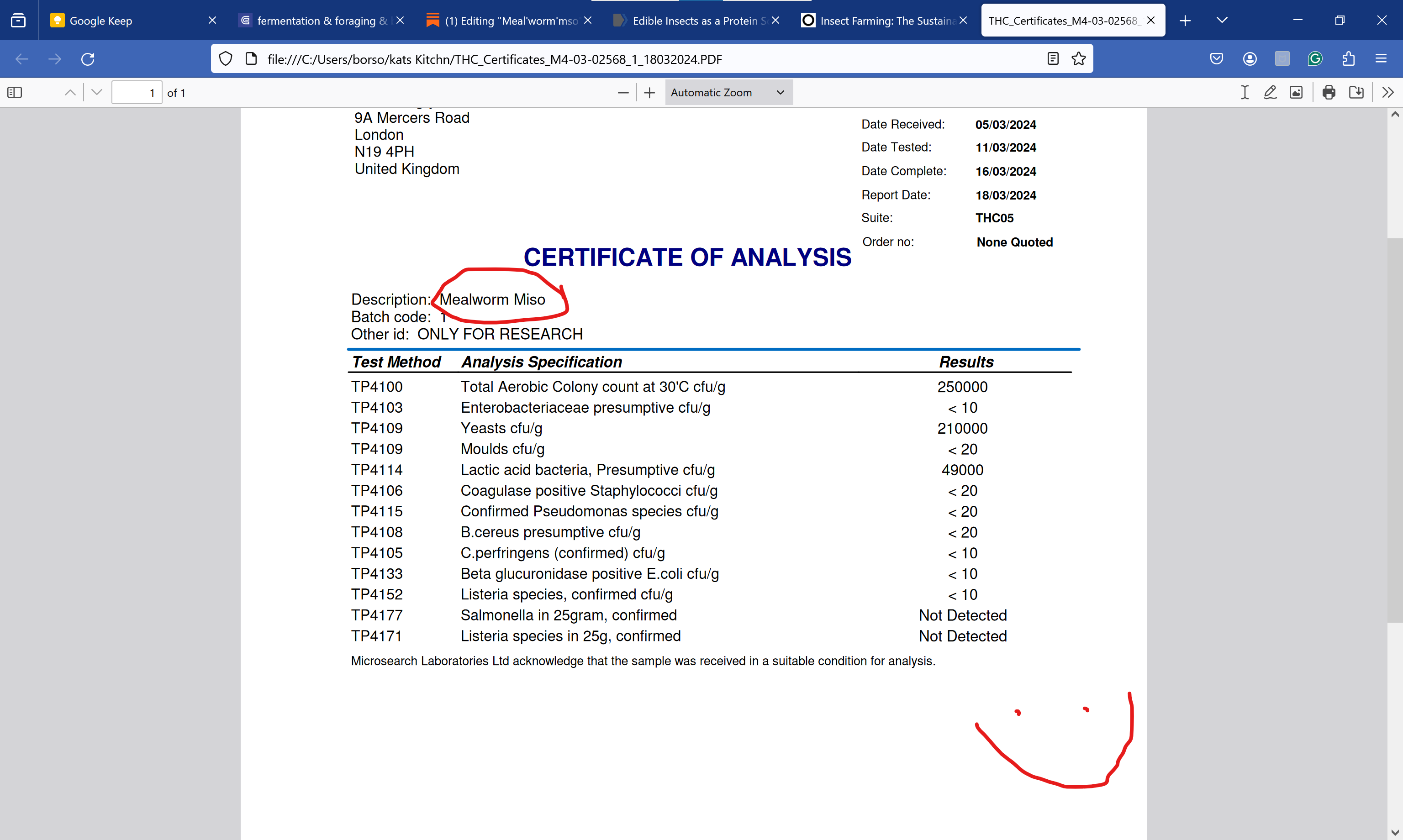
All clean and beautifully full-on live healthy cultures.
Maybe its really time to think about it again.:)
Fascinating stuff Kat. Thank you! I’d eaten a few novelty insect snacks before but it was the acidity of black ants that convinced me that they could be delicious as well as sensible. Would love to try this miso!
Wonderful stuff kat!